GSK acquires Chimagen’s trispecific T-cell engager: analysis of multispecific antibody space and Chimagen patent

Multispecific antibodies have emerged as a promising class of cancer immunotherapeutics to target multiple epitopes for improved tumor selectivity and clinical efficacy. Bispecific and trispecific antibodies are engineered to contain two and three binding sites, respectively, allowing them to engage multiple cell types to trigger a more precise and thorough immune attack on cancer cells. Since the approval of the first bispecific T-cell engager (BiTE), blinatumomab (brand name Blincyto), in 2014, fifteen bispecific antibodies have received FDA approval across a range of hematologic malignancies, with the latest approval of linvoseltamab (brand name Lynozyfic) taking place in 2025. Despite the successes of bispecific antibodies in securing regulatory approvals, trispecific antibodies have not kept up. Developments in trispecific antibodies remain at the preclinical studies and clinical stages, led by GT Biopharma’s Tri-specific Killer Engager (TriKE) platform, Johnson & Johnson’s Ramantamig targeting BCMA and GPRC5D on myeloma cells and CD3 on T cells, and AbbVie’s ISB 2001 targeting BCMA and CD38 on myeloma cells and CD3 on T cells. Competitions intensified in September when GSK announced a deal with Chimagen Biosciences to acquire its potential best-in-class CD19/CD20/CD3 trispecific T cell-engager (TCE) for multiple myeloma, with phase 1 clinical trials set to begin in 2027. The deal, worth up to $750 million, came just two weeks after Roche obtained global exclusive licensing rights to Simcere Zaiming’s CD79A/CD19/CD3-targeting trispecific SIM0660.
Chimagen’s trispecific TCE is protected by U.S. Patent No. 12,134,661 (the ’661 patent) granted on November 5, 2024 with an anticipated expiration date of April 29, 2040. The ’661 patent describes a bispecific antibody comprising three polypeptides and binding to CD3 and CD19 (FIG. 1), and a trispecific antibody comprising four polypeptides and binding to CD3, CD19, and CD20 (FIG. 2).
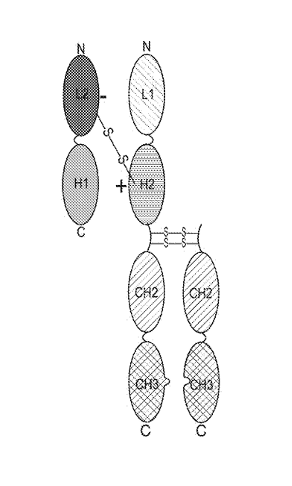
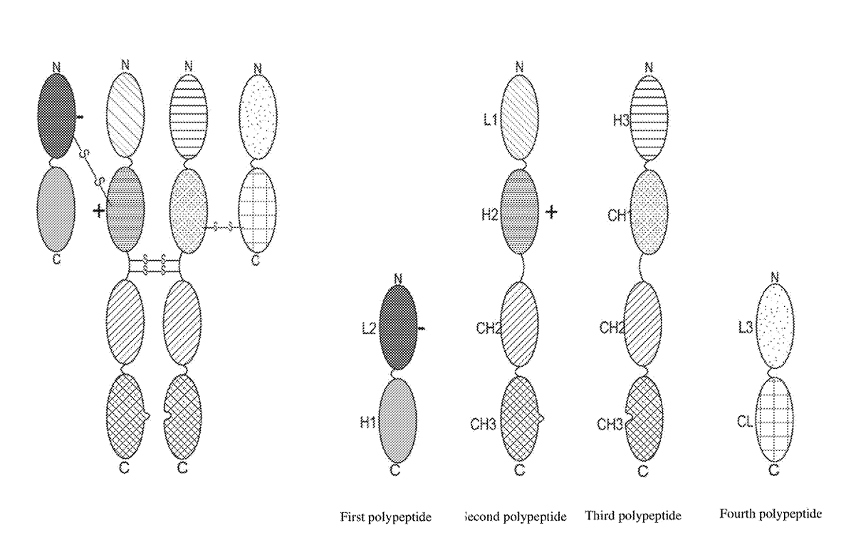
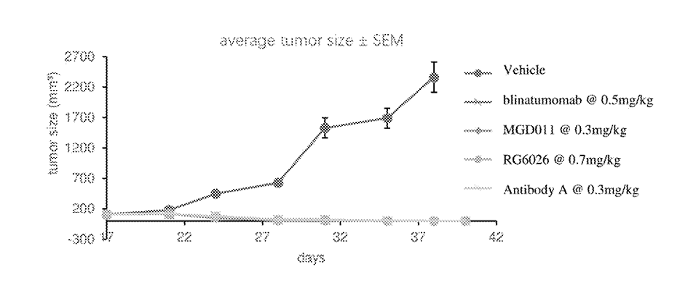
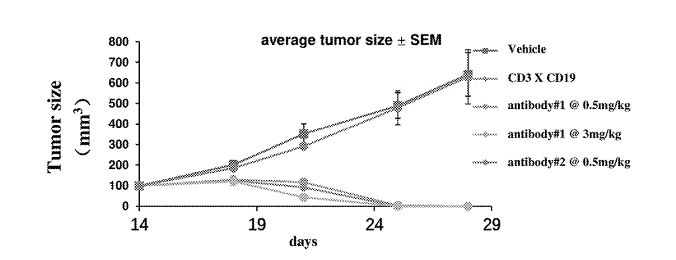
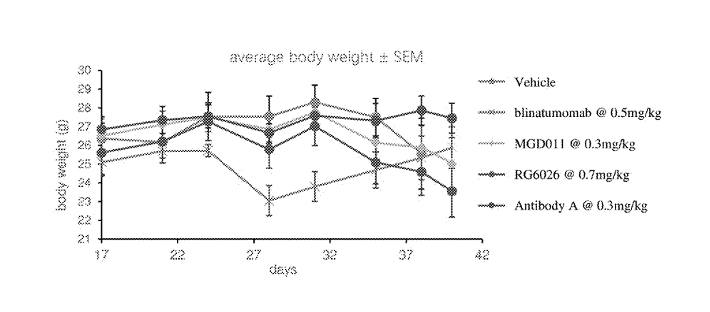
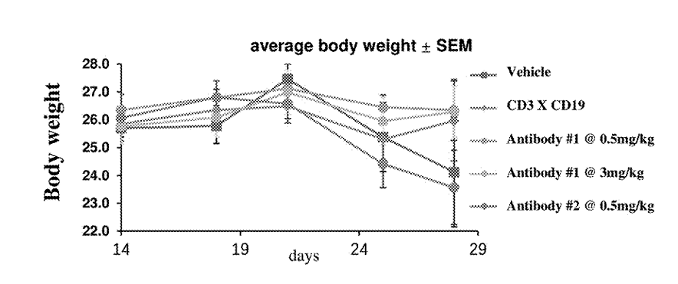
The patent discloses disulfide bonds covalently connecting the association site-bearing polypeptides for improved stability and specific linker sequences between variable domains on the same polypeptide. Additional protein engineering features include mutations to charged amino acids in the variable domain to electrostatically deter non-covalent homodimer formation for improved stability and purity, and a knob-in-hold structure in the fragment crystallizable (Fc) segment formed from suitably positioned large amino acid side chain-protuberances next to small amino acid side chain-cavity to drive hetero-oligomerization. The patent reports affinity constants of exemplary bispecific and trispecific antibodies to CD3, CD19, and /or CD20. In vivo efficacy and toxicity data show that both the bispecific antibody example (antibody A) and trispecific antibody examples (antibody #1 and #2) significantly suppress tumor growth (FIG. 3, 4) with no significant weight loss in mice (FIG. 5, 6). The patent issued with a single product claim, directed to a CD3xCD19xCD20 trispecific antibody defined by specific amino acid sequences.
[This post is for educational purposes only. It reflects my own analysis of publicly available information, does not constitute legal advice, and does not create an agent-client relationship. Views expressed are my own, not those of any employer or client.]


